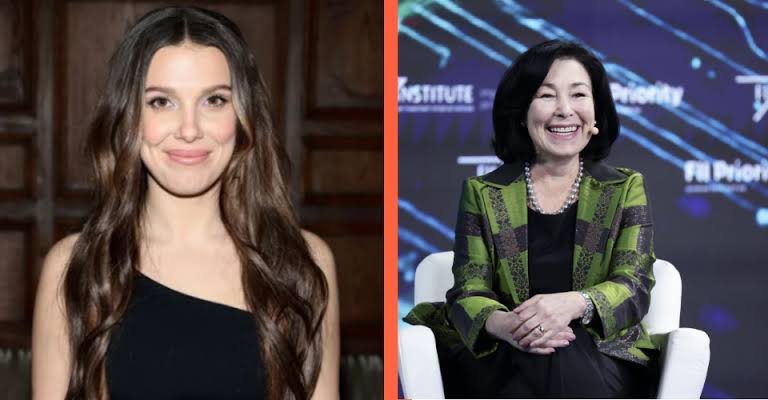
Success can take many forms. For some people, it comes through storytelling, creative expression, and the ability to connect with audiences around the world. For others, it develops through strategic thinking, business leadership, and the ability to guide complex organizations through changing markets. Millie Bobby Brown and Safra Catz represent these distinct approaches to professional achievement.
Brown became internationally recognized as an actress before expanding into entrepreneurship and beauty. Catz built her reputation in corporate finance and technology leadership, becoming one of the most prominent executives associated with Oracle. Although their industries and professional responsibilities differ considerably, their careers offer an interesting opportunity to examine ambition, adaptability, public influence, and the many ways women build lasting professional identities.
The connection between Millie Bobby Brown and Safra Catz is best understood as a comparison of two accomplished individuals rather than a shared business venture or personal relationship. Their experiences illustrate how success depends on different combinations of talent, preparation, decision-making, and the ability to respond to new opportunities.
Who Are Millie Bobby Brown and Safra Catz?
Understanding their professional backgrounds provides a useful starting point for comparing their achievements.
Millie Bobby Brown: From Acting Breakthrough to Entrepreneurship
Millie Bobby Brown is a British actress and entrepreneur who rose to international prominence through her portrayal of Eleven in Netflix’s science-fiction series Stranger Things. Her performance helped establish her as one of the most recognizable young actors of her generation.
Born in 2004, Brown began pursuing acting at an early age. Before her major breakthrough, she appeared in television productions, gradually building the experience necessary to compete in a demanding entertainment industry. Her role in Stranger Things, which premiered in 2016, significantly expanded her audience and opened opportunities in film, fashion, and commercial partnerships.
Brown subsequently appeared in productions including Enola Holmes and its sequel, taking on a more active role behind the camera as a producer. These projects demonstrated her interest in participating in creative development rather than limiting her career to acting.
Her entrepreneurial activities also include Florence by Mills, a beauty and lifestyle brand introduced in 2019. The brand reflects an effort to translate her public profile into a consumer business aimed particularly at younger audiences.
Brown’s career therefore spans several connected areas: performance, production, personal branding, and entrepreneurship.
Safra Catz: A Career in Corporate Leadership
Safra Catz is an American business executive best known for her long association with Oracle, one of the world’s major enterprise software and cloud technology companies.
Born in 1961, Catz studied at the University of Pennsylvania and earned her law degree from the University of Pennsylvania Carey Law School. Before joining Oracle, she developed experience in investment banking and corporate finance, including work at Donaldson, Lufkin & Jenrette.
She joined Oracle in 1999 and became an important figure in its financial and strategic operations. Her responsibilities expanded as the company pursued acquisitions, reorganized parts of its business, and adapted to changes in the technology market.
Catz became Oracle’s co-chief executive officer in 2014 alongside Mark Hurd. Following Hurd’s death in 2019, she served as the company’s sole CEO until 2025, when Oracle announced a leadership transition that placed Clay Magouyrk and Mike Sicilia in the co-CEO roles.
Her career illustrates a different route to influence: developing specialized expertise, building credibility within a large organization, and taking responsibility for decisions with substantial financial and operational consequences.
Are Millie Bobby Brown and Safra Catz Connected?
One important question behind searches for Millie Bobby Brown and Safra Catz is whether the two women share a personal, professional, or business connection.
Based on the public information available, there is no verified evidence establishing a direct relationship, joint business venture, or shared professional project between them. Their names can be compared meaningfully because of their achievements, but a comparison should not be mistaken for proof of a personal association.
Brown’s public career centers on acting, entertainment production, and entrepreneurship. Catz’s professional record centers on enterprise technology, corporate finance, and executive leadership at Oracle. These are different professional environments with different expectations and measures of success.
There is also no established public evidence that Catz invested in Brown’s Florence by Mills brand or collaborated with her on a commercial project.
Understanding this distinction is important for readers. Search results sometimes place two public figures together without demonstrating that they have actually worked together. Reliable reporting should separate documented facts from speculation.
Comparing Their Careers: Entertainment Versus Technology
Although their professional paths differ, Brown and Catz offer a useful comparison of how individuals develop influence in highly competitive industries.
Millie Bobby Brown: Creative influence
Brown’s career illustrates the importance of performance, storytelling, audience relationships, and creative development. Her transition from acting to producing and entrepreneurship shows how entertainment professionals can pursue opportunities beyond appearing on screen.
Safra Catz: Organizational influence
Catz’s career illustrates the value of financial expertise, operational judgment, strategic planning, and organizational knowledge. Her leadership at Oracle required managing complex business priorities in a competitive global technology market.
Different Definitions of Professional Success
In entertainment, success can be reflected in an actor’s performances, the reach of a production, creative recognition, and the ability to develop projects that resonate with audiences.
In corporate leadership, success involves a broader set of responsibilities. Executives must consider business performance, investment decisions, employees, customers, competitors, and long-term strategic priorities.
Neither path is inherently superior. Each requires a different combination of skills, and both involve challenges that are not always visible to the public.
Brown’s career demonstrates the potential of combining creative work with business development. Catz’s career demonstrates how technical and financial knowledge can support advancement into senior leadership.
The Role of Entrepreneurship in Brown’s Career
Millie Bobby Brown’s business activities add an important dimension to her professional story. Her work with Florence by Mills illustrates how a recognizable public identity can become the foundation for a consumer-facing brand.
Building a Brand Around an Existing Audience
Celebrity entrepreneurship often begins with an advantage that traditional startups do not have: an existing audience.
An actor with an established following may have immediate visibility among potential customers. However, attention alone does not guarantee that a product will succeed. A sustainable brand also needs appropriate pricing, product quality, distribution, customer service, and a clear identity.
Florence by Mills entered the beauty market in 2019, positioning itself around beauty and lifestyle products for younger consumers.
The broader lesson is that a public profile can introduce a business to customers, but the business must provide value independently of the celebrity’s popularity.
Moving Beyond Personal Recognition
For entertainers who become entrepreneurs, one challenge is establishing credibility outside their original profession.
Consumers may initially discover a brand because of its founder. Their decision to purchase again, however, often depends on their experience with the product.
Successful brand development therefore requires attention to customer feedback, consistency, and long-term positioning. It also requires recognizing that operating a company involves different responsibilities from performing in a film or television series.
Brown’s expansion into production and business demonstrates an effort to participate in multiple aspects of the entertainment and consumer industries. The long-term performance of any individual venture should be assessed through reliable business information rather than assumptions based on the founder’s fame.
What Safra Catz’s Leadership Career Reveals About Business Strategy
Safra Catz offers a different perspective on professional advancement. Her career at Oracle shows how financial experience and organizational knowledge can contribute to senior executive responsibility.
Financial Expertise as a Leadership Foundation
Catz developed experience in investment banking before joining Oracle in 1999. Her background in finance was relevant to a company operating in a competitive industry where acquisitions, capital allocation, and long-term investment decisions can influence strategic direction.
Corporate finance involves more than tracking revenue or expenses. Leaders must assess risks, compare opportunities, evaluate potential returns, and determine how available resources can support business objectives.
These capabilities become particularly important in large technology companies, where product development, infrastructure investment, acquisitions, and international operations require coordination across many functions.
Leading Through Industry Change
Oracle has evolved from its historical strength in database software into a company with major cloud infrastructure and enterprise applications businesses.
During her tenure as CEO from 2014 to September 2025, Catz helped lead the company through significant strategic changes. Her responsibilities included overseeing operations and supporting Oracle’s competitive position as enterprise customers increasingly considered cloud-based services.
In September 2025, Oracle announced that Catz would transition from CEO to Executive Vice Chair of its board, with Clay Magouyrk and Mike Sicilia appointed as co-CEOs. Oracle’s official announcement documents this leadership transition. Oracle Investor Relations+1
The transition also illustrates a broader principle of corporate governance: leadership responsibilities change as organizations develop new priorities and prepare the next generation of executives.
Why Long-Term Strategy Matters
Technology companies must balance current financial performance with investments that may take years to produce meaningful results.
Executives need to evaluate changing customer expectations, technological developments, competitive pressures, and the costs of maintaining existing services while building new capabilities.
There is no single formula for making these decisions. Strong corporate leadership requires clear priorities, reliable information, risk management, and the willingness to adjust strategies when circumstances change.
Catz’s experience offers a case study in executive responsibility, particularly for readers interested in corporate strategy, enterprise software, and women’s leadership in technology.
What Their Careers Teach About Women in Business
The careers of Brown and Catz also provide two different perspectives on women’s professional opportunities.
Women working in entertainment may face scrutiny related to appearance, public behavior, age, and personal identity. Those entering entrepreneurship can also encounter the practical challenges of financing, hiring, marketing, and building a business that can operate beyond its founder’s direct involvement.
Women in technology and corporate leadership may face a different set of obstacles, including access to senior decision-making roles, expectations surrounding leadership styles, and the pressure to demonstrate sustained business performance.
These experiences are not identical, and neither woman’s career represents every woman’s experience. Still, both illustrate the importance of developing expertise and creating opportunities to exercise influence.
Visibility and Credibility Are Different
Public recognition can help open doors, but it is not the same as professional credibility.
For Brown, credibility in acting depends on performance and creative work. Credibility as an entrepreneur requires a separate set of business capabilities.
For Catz, credibility in corporate leadership developed through years of financial and operational responsibilities, culminating in the role of CEO.
This distinction is useful for anyone building a career. Visibility may create an initial opportunity, but continued advancement typically depends on the ability to deliver results.
Leadership Does Not Require One Personality Type
Popular discussions of leadership sometimes suggest that successful leaders must follow a single model. In reality, professional environments reward different strengths.
Creative industries may place substantial value on imagination, collaboration, communication, and an understanding of audiences. Large corporations may place greater emphasis on strategic alignment, financial judgment, operational execution, and governance.
Both settings require decision-making and the ability to work with other people. However, the way those capabilities are applied depends on the role and the environment.
The comparison between Brown and Catz demonstrates why it is more useful to examine individual skills and professional responsibilities than to define leadership through a narrow stereotype.
Lessons Readers Can Apply to Their Own Careers
The careers of Millie Bobby Brown and Safra Catz offer several practical lessons for people pursuing their own professional goals.
1. Build Skills That Extend Beyond One Role
Career resilience often improves when people develop capabilities that can be applied in different settings.
An entertainment professional might learn production, negotiation, or business management. A technology professional might strengthen communication, financial literacy, or organizational leadership skills.
The objective is not to pursue every possible opportunity. It is to build a foundation that supports informed career decisions as circumstances change.
2. Treat Reputation as a Long-Term Asset
Reputation develops through repeated interactions and visible work. It can influence how colleagues, customers, employers, and business partners evaluate future opportunities.
Maintaining a professional reputation requires consistency, accountability, and realistic communication about achievements.
Public attention may fluctuate, but a track record of reliable work can remain valuable throughout a career.
3. Understand the Business Behind the Profession
Creative ability and technical expertise are important, but understanding the economic environment surrounding a profession can improve decision-making.
For entrepreneurs, this means understanding customers, costs, pricing, and competition. For corporate employees, it means learning how their work contributes to organizational goals and financial performance.
People who understand both their specialized responsibilities and the broader business context are often better equipped to identify opportunities.
4. Prepare for Change Rather Than Relying on Past Success
Industries evolve, and professional achievements do not eliminate the need to adapt.
Entertainment trends change, audiences develop new preferences, and businesses must respond to shifting market conditions. Technology companies face their own pressures as new products, services, and competitors emerge.
Long-term development depends on continued learning and the ability to evaluate new opportunities without abandoning sound judgment.
5. Measure Success According to Meaningful Goals
Professional success is not defined exclusively by fame, job titles, or financial outcomes.
For one person, it might mean building a sustainable business. For another, it might involve leading a team, creating influential work, or developing expertise in a specialized field.
Clear goals make it easier to evaluate progress and determine which opportunities deserve attention.
Frequently Asked Questions
Are Millie Bobby Brown and Safra Catz related?
There is no verified public information establishing a family relationship between Millie Bobby Brown and Safra Catz. Their documented professional backgrounds belong to different industries.
Have Millie Bobby Brown and Safra Catz worked together?
No publicly documented joint project or professional collaboration has been established between them. Their careers are primarily associated with entertainment and corporate technology, respectively.
What is Millie Bobby Brown famous for?
Brown is best known for playing Eleven in Stranger Things. She has also appeared in the Enola Holmes films and developed business interests, including the Florence by Mills brand.
Who is Safra Catz?
Safra Catz is a business executive known for her long career at Oracle. She served as the company’s CEO from 2014 until September 2025, when she transitioned to the role of Executive Vice Chair. Oracle Investor Relations+1
Is Safra Catz still the CEO of Oracle?
No. Oracle appointed Clay Magouyrk and Mike Sicilia as co-CEOs on September 22, 2025. Catz transitioned to Executive Vice Chair of the board. Oracle Investor Relations+1
What is Florence by Mills?
Florence by Mills is a beauty and lifestyle brand associated with Millie Bobby Brown. It was introduced in 2019 and focuses on consumer products aimed at younger audiences.
What industries do Brown and Catz represent?
Brown is associated with acting, film production, and consumer entrepreneurship. Catz is associated with enterprise technology, corporate finance, and executive leadership.
Why might people search for Millie Bobby Brown and Safra Catz together?
The reason for the paired search is not established by verified public information. Some readers may be interested in comparing their professional achievements, but that possibility does not establish a personal or business connection.
What can aspiring entrepreneurs learn from Millie Bobby Brown?
Her career provides an example of expanding beyond an initial profession into production and consumer branding. Aspiring entrepreneurs can learn to distinguish the visibility provided by a founder’s reputation from the product quality, customer experience, and business planning needed for long-term sustainability.
What can aspiring executives learn from Safra Catz?
Catz’s career highlights the value of financial expertise Millie Bobby Brown and Safra Catz, organizational knowledge, strategic judgment, and experience with complex business decisions. Her progression through different leadership positions also illustrates the importance of developing skills over time.
Conclusion
Millie Bobby Brown and Safra Catz represent two distinct approaches to building professional influence. Brown developed an international career through acting before expanding into production and entrepreneurship. Catz built her reputation through finance, corporate strategy, and executive leadership at Oracle.
Their stories are not evidence of a shared personal or business relationship. Instead, they offer complementary perspectives on career development in entertainment and technology.
The broader lesson is that success rarely follows a single path. Creative achievement, entrepreneurial initiative, financial expertise, and organizational leadership can each create meaningful opportunities when supported by sustained effort and sound decisions.
For readers exploring the careers of influential women, the most useful comparison is not simply who has achieved greater recognition. It is how different skills, professional choices, and responses to change can shape a lasting career.